Where Bamboo Meets Velvet: Rethinking Luxury in Southeast Asia
By Marie. September 22, 2025
Eco-Luxury Is the New Status Symbol
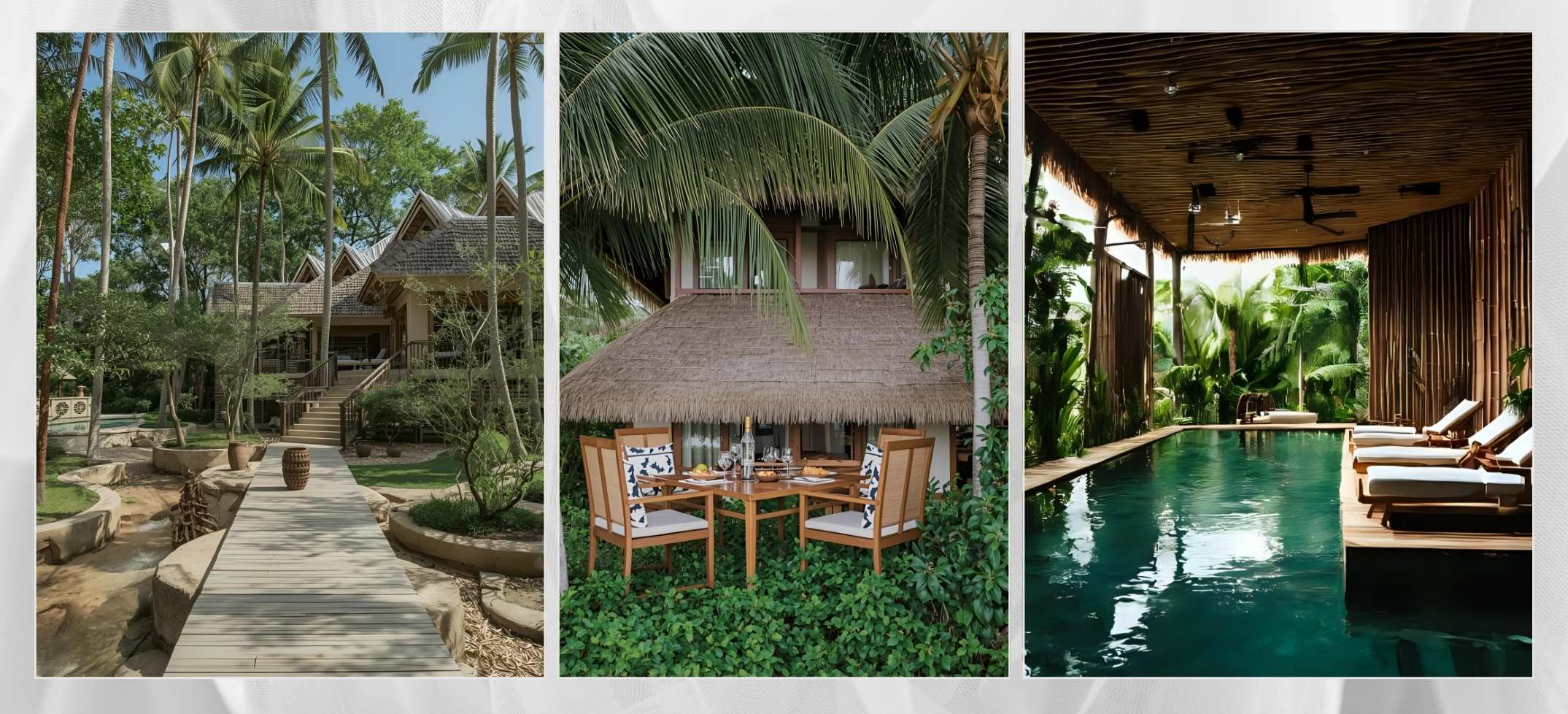
High-end travelers are choosing eco-conscious resorts that blend luxury with sustainability — think bamboo villas, farm-to-table dining, coral tours in places like Phu Quoc and Hoi An, Bali. Even luxury can be regenerative.
The scent of lemongrass lingers in the air as you step barefoot onto polished bamboo floors. Outside, a coral reef breathes beneath the tide, tended not by tourists but by local stewards who know its rhythms. This isn’t just a resort—it’s a living story. And it’s rewriting what luxury means in Southeast Asia.
Across the region, a quiet revolution is unfolding. High-end travelers are trading marble lobbies for open-air sanctuaries built from reclaimed wood and woven palm. In places like Phu Quoc, Hoi An, Bali, and Batangas, eco-luxury is no longer a niche—it’s the new status symbol. These spaces offer not just comfort, but conscience.
The Rise of Regenerative Retreats
Take Zannier Hotels Bai San Ho in Vietnam, where architecture echoes local fishing villages and guests are invited to join coral restoration dives. Or Bambu Indah in Bali, where antique Javanese houses have been reborn as riverside sanctuaries. These aren’t just places to stay—they’re invitations to belong.
Luxury here is tactile and intentional. It’s the feel of handwoven linens, the taste of farm-to-table jackfruit curry, the sound of silence broken only by cicadas. It’s knowing your presence supports local artisans, not displaces them.
Why This Matters for Storytellers
Cultural storyteller might find that these spaces offer more than rest—they offer resonance. They’re proof that beauty and ethics can co-exist, and that travel can be a form of stewardship. Whether they are designing workshops, scouting film locations, or simply dreaming their book's next chapter, these places remind us: luxury can be gentle. It can be generous.
Eco-Travel, Eco-Luxury and The Connection To A Deeper, More Meaningful Form of Travel
Some stories that became a global phenomena were inspired by these experiences. They are often a mix of books and films that don't explicitly promote "eco-travel" but are deeply rooted in a sense of place, a respect for nature, and an exploration of how humanity interacts with it.
Here are some examples of books and films that became global phenomena, and whose authors or producers were inspired by the kind of resonance described herein, particularly within a Southeast Asian context:
Books
- The Beach by Alex Garland: While the book's message is complex and ultimately critical of the very idea of a "perfect" hidden paradise, it is a global phenomenon that was directly inspired by Southeast Asia. The story, about a group of travelers who find a secret, unspoiled island in Thailand, became a cultural touchstone for a generation of backpackers. Its legacy, however, is a cautionary tale about how the search for a pristine, untouched location can ironically lead to its destruction. It's a powerful and resonant example of the very tension mentioned—the coexistence of beauty and ethics, and what happens when that balance is broken.
- Eat, Pray, Love by Elizabeth Gilbert: The "Love" portion of this global bestseller takes place in Bali, Indonesia. While not a strict "eco-travel" book, it showcases a deep appreciation for the island's culture, spirituality, and natural beauty. Gilbert's narrative of finding a sense of self and community in a foreign land resonated with millions, inspiring a wave of "spiritual" and "wellness" tourism to Bali and beyond. It highlights how a place can offer more than a vacation—it can provide a space for personal transformation and healing.
- The Mountains Sing by Nguyễn Phan Quế Mai: This novel, a global sensation, is a powerful multi-generational story set in Vietnam. It's not a travelogue, but its vivid descriptions of the Vietnamese landscape, from the rice paddies and jungles to the bustling streets, are a testament to the author's deep connection to her homeland. The book's success is a reminder that the most compelling stories of a place are often those that speak to its people, history, and resilience, all of which are central to the spirit of ethical and resonant travel.
Films
- The Beach (2000 film adaptation): The movie, starring Leonardo DiCaprio, cemented the book's status as a global phenomenon. Filmed primarily in Thailand's Maya Bay, the movie's portrayal of a hidden utopia instantly made the location a mecca for tourists. Ironically, the overwhelming influx of visitors led to significant environmental damage, forcing the Thai government to close the bay for a period to allow for ecological recovery. This is a real-world example of the "stewardship" — and what happens when it is neglected.
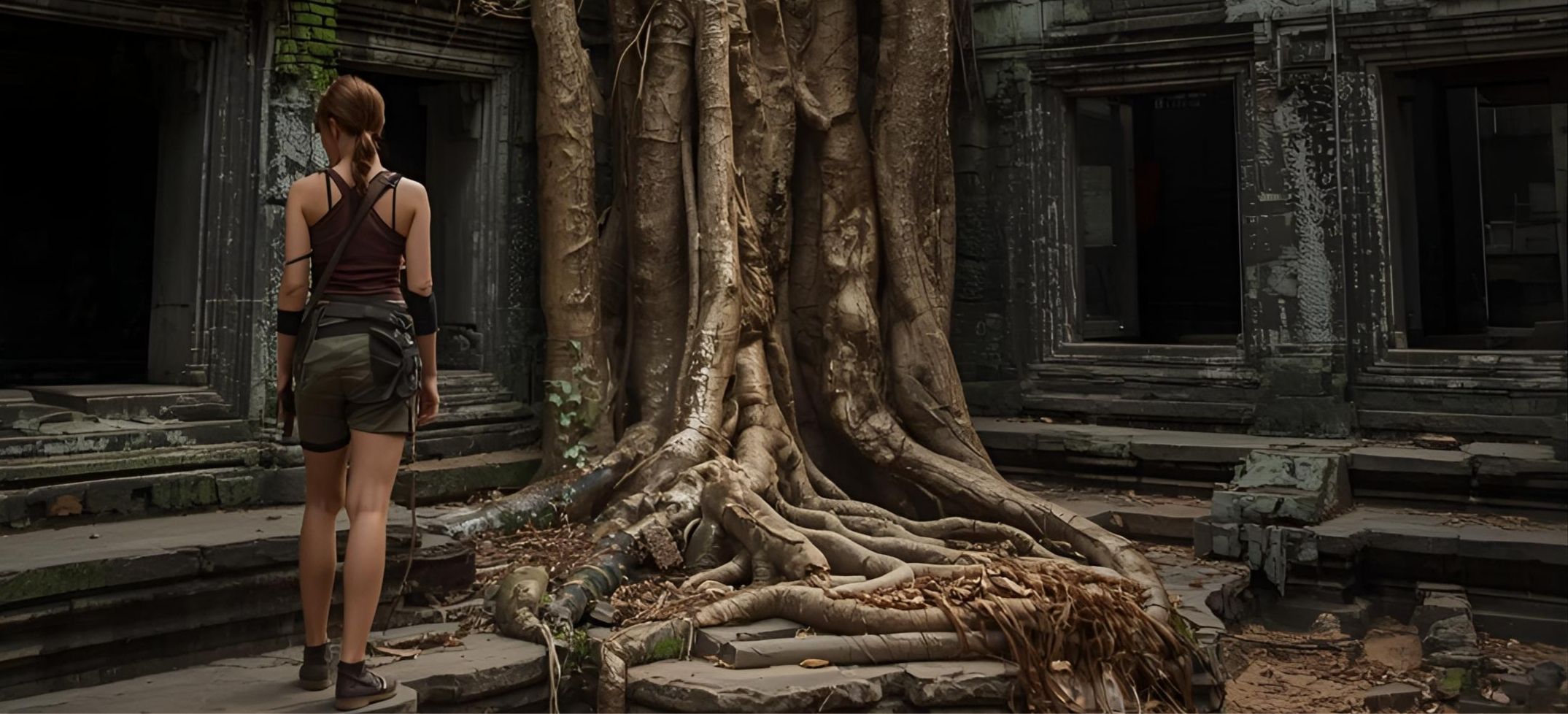
- Lara Croft: Tomb Raider (2001): The film's iconic scenes were shot in the ancient temples of Angkor in Cambodia, particularly Ta Prohm, where tree roots intertwine with the stone structures. The movie brought the breathtaking beauty and rich history of Cambodia's temples to a global audience, inspiring countless travelers to visit. It's an example of how a film can showcase the "resonance" of a place by highlighting its history and the powerful, humbling relationship between nature and human creation.
- Crazy Rich Asians (2018): This film's global success was a huge win for Singapore's tourism. While it focuses on the opulence of the city-state, it also showcases its unique blend of modern design and lush, natural spaces, like the Gardens by the Bay. The film proved that "luxury can be gentle" and "generous" by highlighting a destination that integrates nature and sustainability into its very fabric, offering a new vision of what a cosmopolitan city can be.
These examples illustrate the powerful connection between travel, storytelling, and a sense of place. While not all are explicitly "eco-conscious," they all resonated globally by capturing the unique beauty, ethics, and spirit of Southeast Asian locations, proving that these places offer more than just a backdrop—they are essential characters in their own right.
What Does Luxury Rooted in Sustainability Mean to You?
What does “luxury” mean to you when it’s rooted in sustainability? Share a moment when comfort and conscience aligned—whether in travel, design, or daily life.
What is cultural storytelling?
Storytelling is the cultural practice of sharing stories with others. There are many forms of storytelling—oral, digital, and written—and the medium used is often reflective of the people telling the stories.(National Geographic Society)
Who are considered cultural storytellers?
Cultural storytellers are individuals or groups who pass on a community's history, values, and traditions through narrative forms like myths, songs, and spoken-word performances. While the role can be a formal position, it is often fulfilled by family elders, poets, religious leaders, and performers who share and preserve stories. (National Geographic Society)
Types of cultural storytellers
- Elders and family members. In many cultures, the most common storytellers are older family members, like grandmothers, who share anecdotes and folktales with younger generations. This informal method of storytelling is crucial for transmitting familial and cultural identity.
- Oral historians and bards. Before widespread literacy, specialized performers memorized and recited epic poems, histories, and myths.
- Religious and ceremonial storytellers. Narratives are central to many religious traditions, with rituals often centered on storytelling.
- Performers and visual artists. Cultural stories can be conveyed through non-literary mediums.
Modern cultural storytellers
Even with mass media, the tradition of cultural storytelling continues to evolve: (Museum on Main Street)- Filmmakers and documentarians who document and interpret a culture's narrative.
- Authors and poets who preserve and create stories for new generations.
- Museums and exhibition designers who use artifacts and multimedia to tell cultural stories.
- Online content creators who produce digital stories about lived experiences for global audiences.