Curtains Rise in Iloilo: Remembering My Nanay Mameng and the Zarzuela Stage
By Marie. July 22, 2025. Updated October 12, 2025.
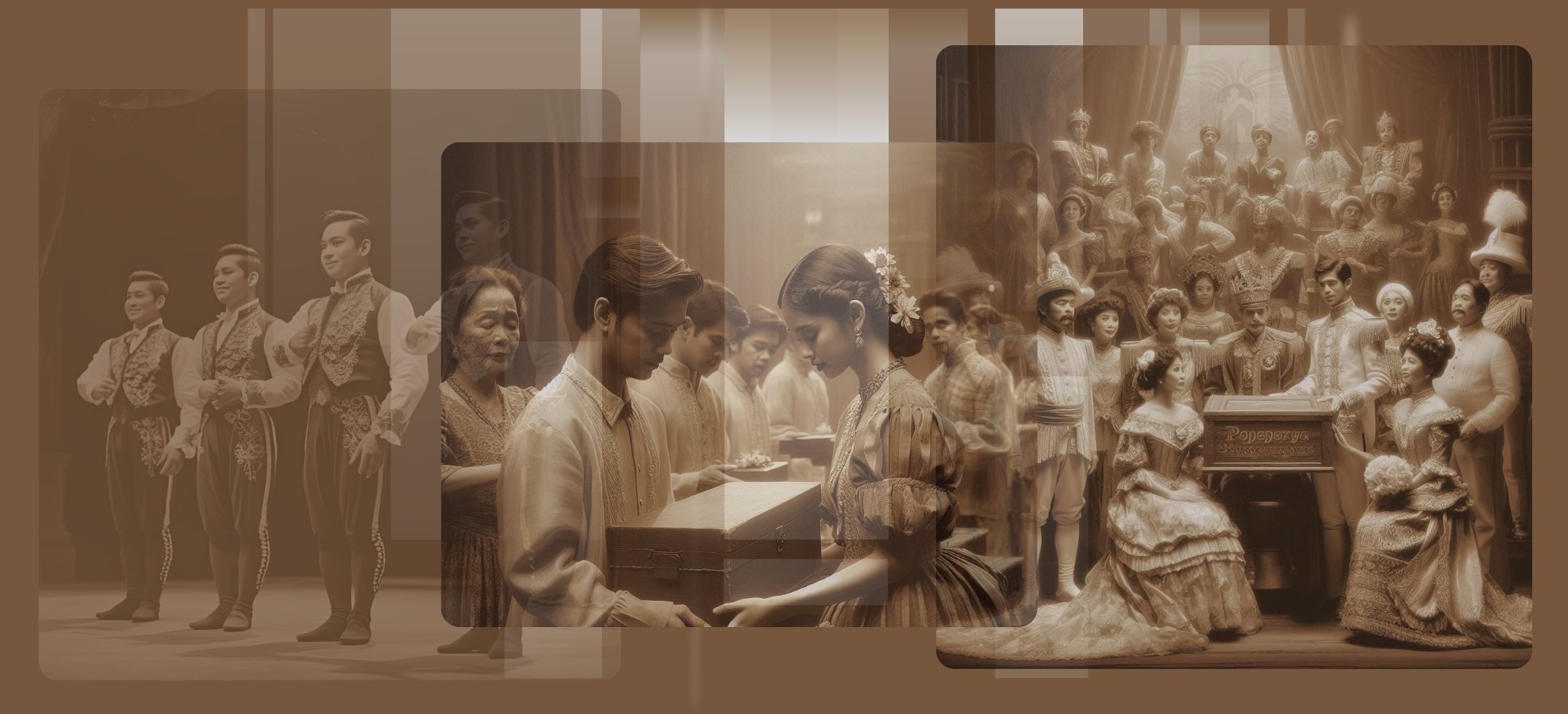
In the 1930s, Iloilo City pulsed with the rhythm of zarzuela—musical dramas that danced between satire and sentiment, staged in Spanish and Hiligaynon. My grandmother Carmen, who I fondly called Nanay Mameng, was part of this vibrant tradition. She belonged to a traveling troupe invited by Iloilo’s wealthy families, who hosted performances in their grand homes. But some productions reached wider audiences, staged in actual theatres like the University of San Agustin Theatre—a venue I later walked into as a student, trying to imagine its former glory.
I remember the baul in our house, filled with mysterious trajes—mestizas made of jusi, lace, and faded embroidery. I never knew their purpose until it was too late. They were Nanay’s costumes, relics of a time when she sang and acted under the spotlight, her voice echoing through Iloilo’s halls.
Zarzuela in Iloilo wasn’t just entertainment—it was a mirror to society, a celebration of wit, romance, and resistance. Doreen Fernandez’s The Iloilo Zarzuela, 1903–1930 captures this golden era, when local playwrights and performers shaped a theatrical identity rooted in regional pride.
Today, the trajes may be gone, but Nanay Mameng’s legacy lingers—in the stories she left behind, and in the quiet reverence I feel each time I pass the old theatre. The zarzuela may have faded from public memory, but for me, it remains a living thread, stitched into the fabric of family and place.
Historical Sidebar: The University of San Agustin Theatre in Iloilo’s Cultural Life
By Marie. July 22, 2025

Nestled along Gen. Luna Street in Iloilo City, the University of San Agustin (USA) has long been a beacon of cultural heritage in Western Visayas. Established in 1904 by the Order of Saint Augustine, it became the region’s first university in 1953. But beyond its academic legacy, USA nurtured a vibrant theatrical tradition.
The university theatre—housed in the historic Urdaneta Hall, which survived World War II—became a stage for zarzuelas, veladas, and community performances. In the 1960s, Rev. Angel Dulanto, OSA, introduced the annual velada, a weeklong celebration of artistic and cultural events, with zarzuela as its centerpiece. Professors and students alike took part, turning the theatre into a living archive of Ilonggo creativity.
Today, the USA Little Theater continues this legacy, hosting festivals like the Iloilo Theater Festival (ILOTF), which gathers regional troupes to explore storytelling, identity, and social transformation. The theatre remains a space where memory and imagination converge—where voices like my grandmother Nanay Mameng’s once echoed, and where new generations still take the stage.