From Binondo to Bangkok: Reflections Inspired by “Can’t Buy Me Love” Drama
By Marie. Updated July 23, 2025
Have you seen Can’t Buy Me Love? The Donny Pangilinan and Belle Mariano starrer somehow swept me off my feet—and took me back to the winding streets of Chinatown.
It was the first Filipino drama I actually watched all the way through (it’s streaming on Netflix), and wow—I was genuinely impressed. The storytelling felt refined and sharp, with no spoon-feeding or dumbing down. I tip my hat to the scriptwriters: their craft has truly evolved. The series had surprising twists, emotional depth, and a director who masterfully wove together 50+ episodes.
Donny Pangilinan caught my attention. His performance had nuance, and before I knew it, I was reading up on him. This young man can act. Really act.
Beyond the love story and drama, I was drawn to the setting—Binondo. The oldest Chinatown in the world, right here in Manila. The choice of backdrop made the show feel grounded, affirming, and beautifully Filipino with a strong Chinese cultural presence. Kudos to the producers for choosing such a rich and authentic canvas.
And that brings me to my own wanders.
I’ve lived in Manila for over 30 years, and my sister and I often find ourselves meandering through Binondo’s hidden corners. Founded in 1594, it remains a vibrant mix of commerce, heritage, and community shaped by generations of Chinese immigrants. It’s one of those places that rewards you for looking closely—whether it’s a tucked-away temple, a decades-old panciteria, or a street buzzing with stories.
Whenever I travel, I always make it a point to visit the local Chinatown. There’s something familiar yet thrilling about each one.
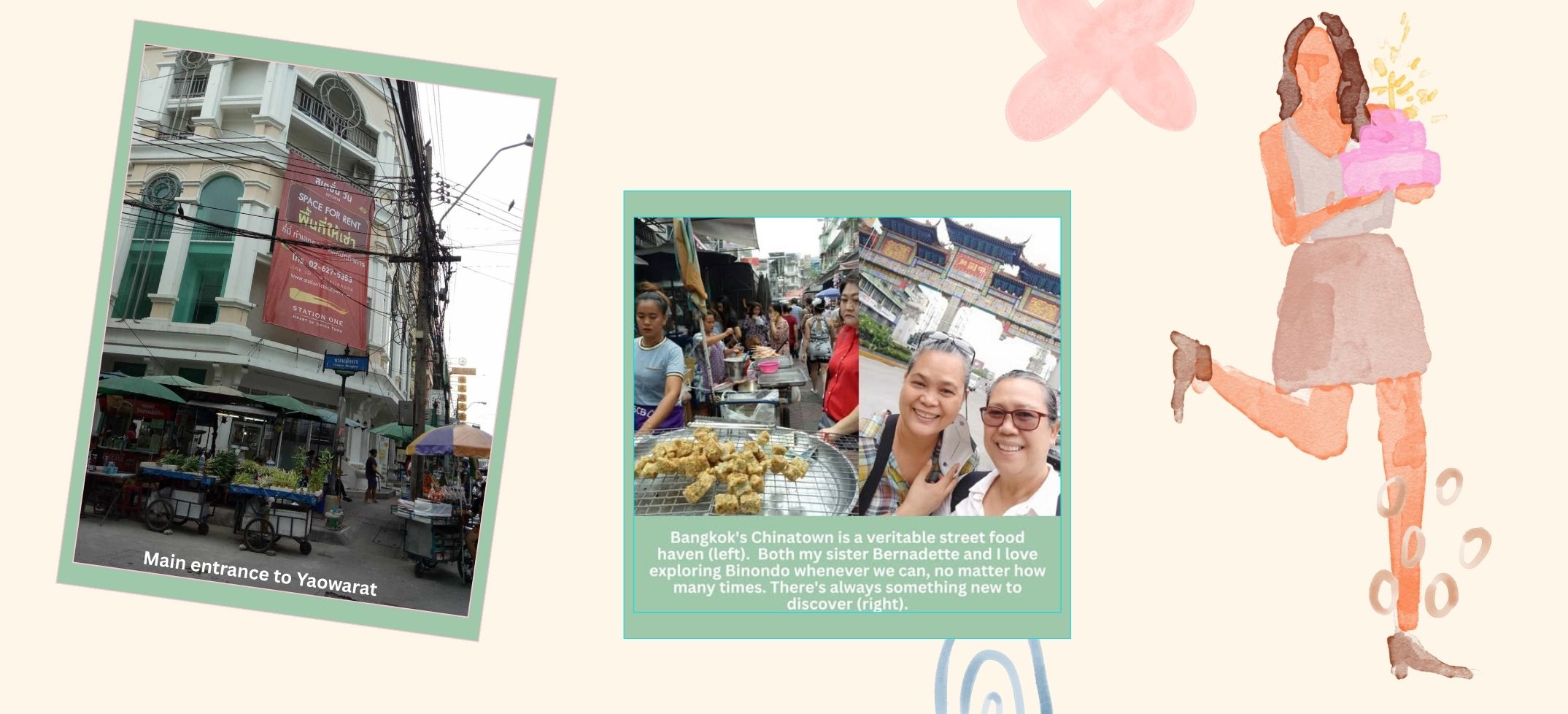
Take Bangkok’s Yaowarat, for instance. I still remember my first visit—riding a ferry from Khao San Road, my heart light and full of childlike wonder. I’ve always been drawn to rivers, maybe because the river shaped life in my home city, too. Bangkok’s Chinatown, founded in 1782, is one of the largest in the world. It pulses with color, movement, and flavors that tempt every curious wanderer. I tried to explore every alley I could before time ran out, wishing my stomach could handle every dish—dim sum, noodles, and everything in between.
Binondo and Yaowarat may be worlds apart, but they share something profound: the enduring spirit of Chinese immigrants and the way they transform and enrich the places they call home.
Whether it’s history, street food, or the comfort of shared heritage, Chinatowns have always offered something special to those willing to wander.