
A Gift from Afar: A New Revenue Opportunity for Philippine Micro-Entrepreneurs
What if your next customer lives thousands of miles away — but the person receiving your product lives just around the corner?
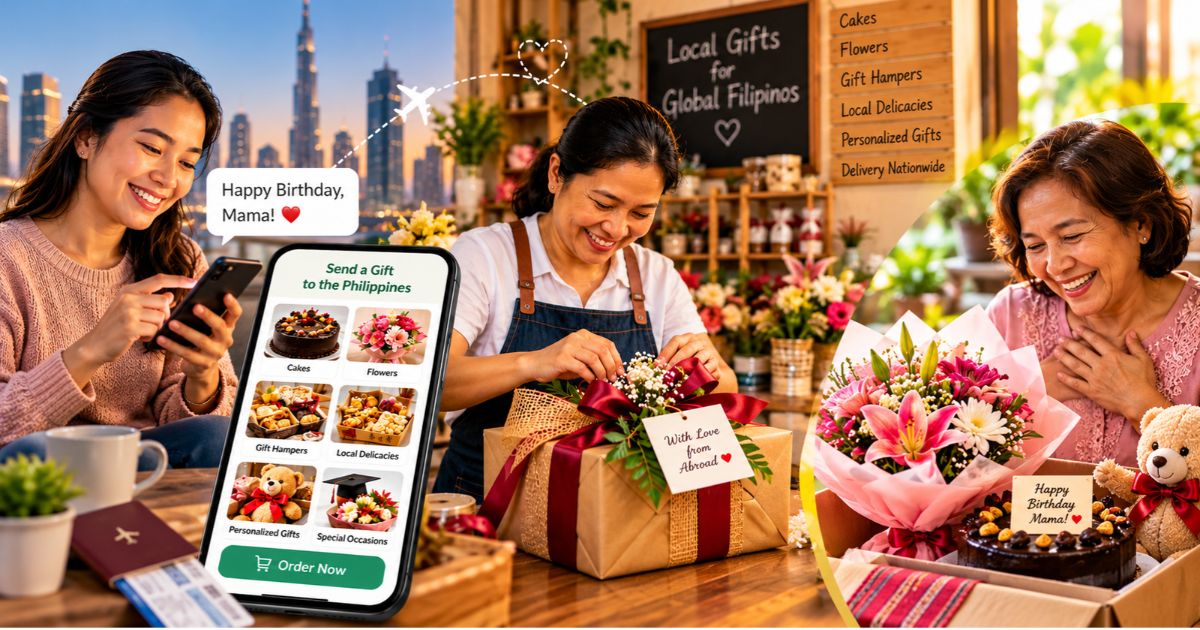
Imagine a Filipino working in Dubai who wants to surprise her mother in Iloilo on her birthday. Or a father in Toronto who wants to send a graduation gift to his daughter in Manila. Perhaps someone in Singapore simply wants to send a box of their hometown’s favorite delicacies to their family back home.
They have the money and the reason to give. What they need is someone reliable in the Philippines who can make it happen.
Could that someone be your business?
A market that reaches beyond our shores
The Commission on Filipinos Overseas estimates that around 10.7 million Filipinos live overseas. They include temporary workers, permanent migrants, and other members of the Filipino diaspora.
That’s a substantial community with family ties, friendships, and connections that continue across borders.
And here’s something worth considering: sending money home is not the only way overseas Filipinos support and connect with their loved ones. Sometimes, they want to send something tangible — a birthday cake, a bouquet of flowers, a food basket, a graduation present, or a simple surprise that says, “I’m thinking of you.”
Filipinos have a wonderful tradition of gift-giving. Birthdays, graduations, anniversaries, Christmas, Valentine’s Day, Mother’s Day, Father’s Day, and even ordinary days can become reasons to send a little something to someone we love.
For a micro-entrepreneur, this presents an opportunity to serve a customer who may be living abroad while providing a product or service to someone in the local community.
The idea is simple: Let overseas Filipinos order and pay for gifts online, while local Philippine businesses prepare and deliver those gifts to their loved ones back home.
You may already have everything you need
You don’t necessarily need to open a new business, purchase new equipment, or develop an expensive website.
You may simply need to add a gifting and delivery service to what you already offer.
Consider these possibilities:
If you own a bakery
Offer birthday cakes, cupcake boxes, celebration packages, or customized pastries. Let customers order from abroad and schedule delivery for a special occasion.
If you run a flower shop
Create bouquets for birthdays, graduations, anniversaries, Valentine’s Day, and other celebrations. Offer add-ons such as greeting cards, chocolates, or small keepsakes.
If you operate a sari-sari store or neighborhood shop
Put together practical gift packages containing snacks, household essentials, personal-care items, or favorite local products. You could even offer a customized grocery package for parents or grandparents.
If you sell local delicacies or specialty food
Create regional food baskets featuring products that remind overseas Filipinos of home. Think of native delicacies, locally made treats, coffee, dried products, or other items that can be safely packaged and delivered.
If you make handicrafts or personalized products
Offer customized bags, home accessories, artwork, souvenirs, or handmade keepsakes. A product that might have a limited local market could appeal to overseas Filipinos looking for something distinctly Filipino.
If you operate a gift shop or general merchandise store
Bundle existing products into ready-made packages for different occasions, budgets, and recipients.
The important thing is to begin with products you already know how to source, prepare, and deliver.
Three ways to turn the idea into a business
You can explore the concept at different levels, depending on your resources and capabilities.
1. Add gift delivery to your existing business
This is the simplest starting point. Create a small catalogue of gift packages, accept orders through Facebook or Messenger, and arrange local delivery.
You don’t need to become a full-fledged online retailer. You are simply making it possible for someone abroad to buy from your shop.
2. Partner with other neighborhood businesses
Suppose you own a bakery but don’t sell flowers. Why not partner with a nearby florist?
A customer could order a cake and bouquet in one package. You coordinate the order, agree on each partner’s share, and arrange one delivery.
Other possible partnerships include:
- Bakeries and flower shops
- Gift shops and local handicraft makers
- Food producers and specialty stores
- Clothing retailers and personalized-gift makers
- Local shops and independent delivery riders
This approach allows small businesses to offer more choices without investing in additional inventory or equipment.
3. Create a local gifting network
If you have an established customer base and good relationships with other businesses, you could eventually create a simple online directory of participating retailers in your town or city.
An overseas customer could browse local products, choose a participating shop, and arrange delivery to a recipient in that area.
This is a bigger undertaking, so it may be better explored after testing the simpler models.
Let AI help you design your gifting service
Here’s where technology becomes useful.
You don’t need to hire a marketing agency, a graphic designer, or a software developer just to explore this opportunity. Affordable digital tools can help you plan and organize your first version of the service.
Here are some practical ways to use them.
1. Ask AI to help you develop gift packages
Suppose you own a small bakery. You want to offer birthday packages but aren’t sure what combinations customers might like.
You could ask ChatGPT:
“I operate a small neighborhood bakery in Bacolod City. I want to offer birthday gift packages that overseas Filipinos can order for delivery to family members in Bacolod. Suggest five packages at different price points using products a small bakery can realistically prepare. Include possible add-ons and ideas for personalized messages.”
You can do the same for graduation gifts, Christmas packages, Valentine’s Day surprises, and other occasions.
AI can help you brainstorm. You decide which suggestions are practical and profitable.
2. Create a digital gift catalogue
Use Canva to prepare a simple catalogue featuring:
- Product photographs
- Package descriptions
- Prices in Philippine pesos
- Available delivery locations
- Ordering instructions
- Contact information
You can share the catalogue through Facebook, Messenger, WhatsApp, or email.
Good photographs matter. Use actual pictures of the products you can deliver. AI-generated images can help with design concepts, but don’t advertise an imaginary cake, bouquet, or gift package as though it were an actual product.
3. Write promotional messages for overseas customers
Not everyone responds to the same message.
Ask AI to prepare different versions of a promotion for Filipinos living in the Middle East, North America, Europe, or Asia.
For example:
“Write a warm and heartfelt Facebook post for overseas Filipinos who want to surprise their mothers in Bacolod on Mother’s Day. Our bakery offers locally delivered cake packages. Use conversational English with a little Filipino warmth. Include a clear ordering instruction.”
You can also request Filipino, English, or other appropriate language versions.
4. Make customer inquiries easier to manage
AI can help you prepare reusable answers to common questions:
- Can I order from overseas?
- What payment methods do you accept?
- Can I choose a delivery date?
- Do you deliver to my recipient’s barangay?
- Can I include a personal message?
- Will I receive confirmation when the gift is delivered?
Prepare clear answers in advance. A business messaging account can help organize inquiries and provide basic automated responses where supported.
5. Keep track of orders and costs
You don’t need sophisticated business software to begin.
A simple Google Sheets file can track:
- Customer’s name and contact information
- Country of origin
- Recipient’s name and delivery address
- Gift package ordered
- Delivery date
- Payment status
- Product and packaging costs
- Delivery expenses
- Amount earned
You can ask AI to help design the spreadsheet and explain how to use it.
The goal is not to automate everything. It is to make the business easier to manage and reduce the possibility of missed orders or costly mistakes.
How would customers find you?
Your first customers may already be within reach.
Start with your existing Facebook page and invite customers to share your new service with relatives and friends overseas.
You can also:
- Join appropriate Filipino community groups, following their posting rules.
- Ask satisfied customers to recommend your service.
- Create occasion-based promotions ahead of birthdays, graduations, and holidays.
- Build partnerships with local community organizations and businesses.
- Encourage customers to share photographs of successfully delivered gifts, with the recipient’s permission.
You could also explore international marketplaces and platforms, but you don’t have to begin there.
A simple digital catalogue and a reliable ordering process may be enough to test whether customers are interested.
Before you start: Make reliability your biggest selling point
Remember, your customer may be thousands of miles away. They are trusting you with something personal.
A late birthday cake, a missing bouquet, or an incorrectly delivered package can damage that trust.
Before accepting orders, establish a few basic rules:
Payment: Determine which payment methods you can securely accept from customers overseas. Check transaction fees, settlement times, currency conversion, and any requirements imposed by your payment provider.
Delivery: Clearly identify the areas you can serve. Establish delivery charges, cut-off times, and arrangements for customers who want to schedule deliveries in advance.
Product quality: Use actual product photographs and explain any possible substitutions. Don’t promise something you cannot reliably provide.
Order confirmation: Confirm the order, payment, recipient’s details, and delivery date before preparing the gift.
Proof of delivery: With the recipient’s consent, send the buyer a photograph or confirmation once the gift has been delivered.
Privacy: Protect the customer’s and recipient’s personal information. Collect only what you need to complete the order, and don’t publish private details or photographs without permission.
Also, calculate your margins carefully. Include product costs, packaging, delivery, payment fees, partner commissions, and the time you spend coordinating the order. A busy gifting service is not necessarily a profitable one.
Start small. Learn. Then expand.
You don’t have to offer fifty gift packages from day one.
Choose one product category. Perhaps you sell cakes, flowers, local delicacies, or handmade products.
Create three packages at different price points. Prepare a digital catalogue. Establish your ordering and delivery procedures. Then introduce the service to your existing customers and ask them to help spread the word.
Monitor the results.
Which packages attract inquiries? Which occasions generate orders? Where do your customers live? Which delivery arrangements work best? Are you making enough from each transaction?
Use what you learn to improve the service before investing in more products, advertising, or technology.
And remember, this is not an entirely unexplored market. Businesses in the Philippines already offer gift delivery to customers overseas. That tells us there is an established customer need — but it also means your service must offer something distinctive.
Perhaps your advantage is a particular hometown, a specialty product, a personal touch, or the ability to deliver something that larger gifting companies don’t offer.
A neighborhood bakery in Iloilo can specialize in local celebration packages. A small food producer in Bicol can create regional delicacy baskets. A handicraft maker in Palawan can offer locally made keepsakes.
Your location and your knowledge of local products may be your competitive advantage.
A little distance. A lot of love. A new business possibility.
For millions of Filipinos living overseas, being away from home doesn’t mean being disconnected from the people they love.
Sometimes, a simple gift delivered on the right day can make the distance feel a little shorter.
For Philippine micro-entrepreneurs, that same gesture could open the door to a new customer base — one that extends far beyond the people who walk past their stores.
You don’t need to build a complicated platform or become a technology expert to explore the opportunity.
Start with what you already sell. Find a way to make it gift-worthy. Make ordering easy for someone abroad. Deliver reliably to someone at home.
Then let affordable technology help you manage the details.
Your next customer may not live in your neighborhood. But the person they want to surprise just might.
The Digital Atelier: Discovering business possibilities, one idea at a time.