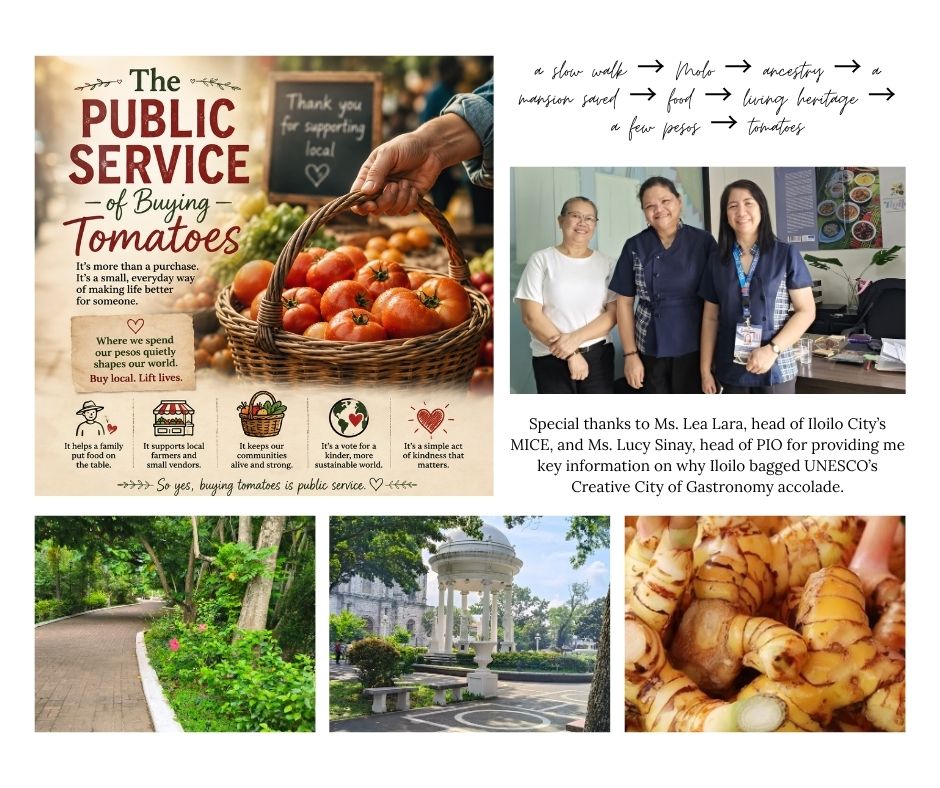
The Public Service of Buying Tomatoes
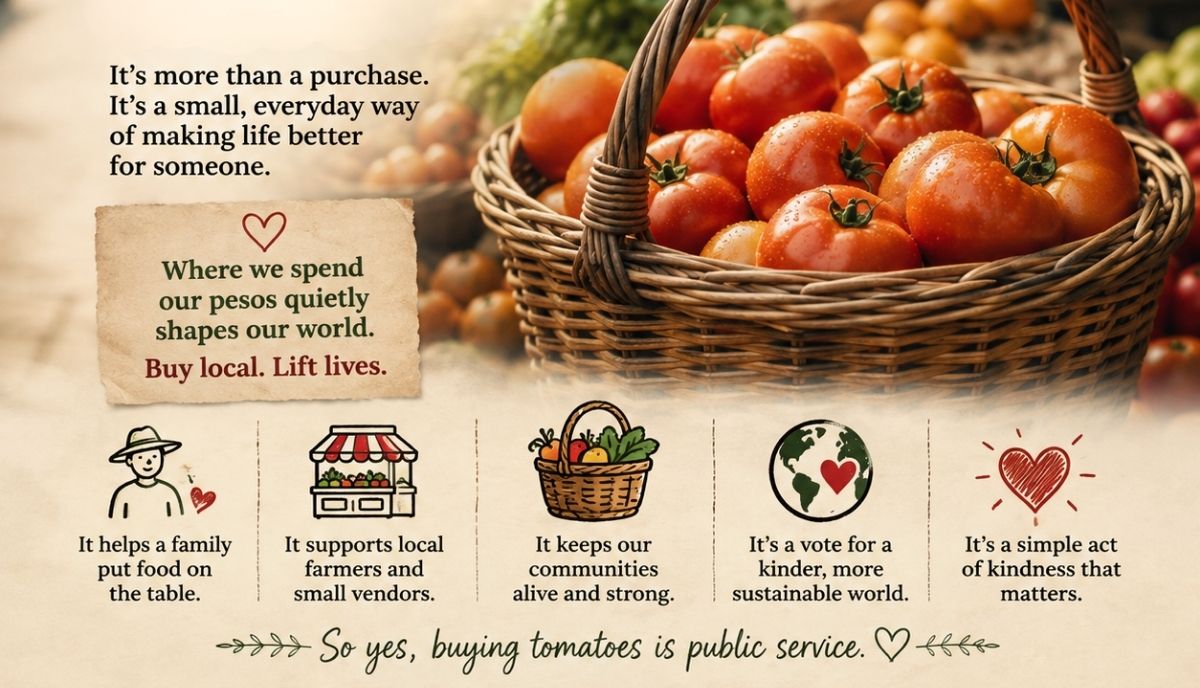
“Where we spend our pesos quietly shapes our world.”
I wasn’t particularly looking for anything.
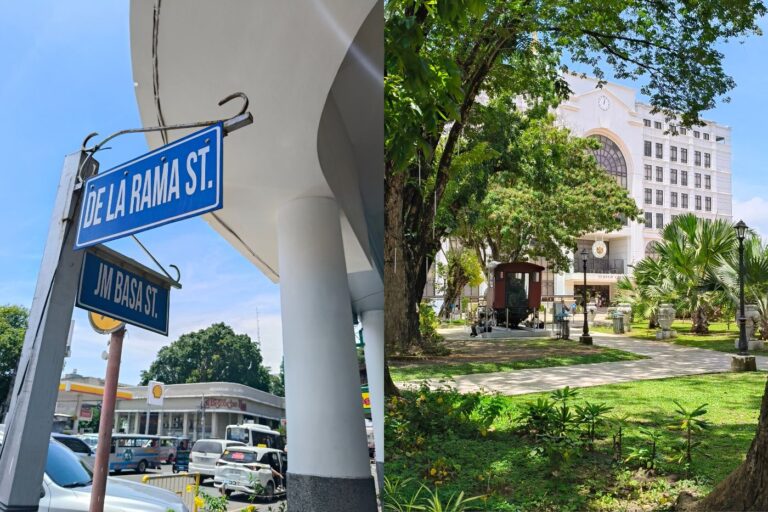
But there I was in Molo Plaza.
It took me just about thirty minutes of slow walking from MO2 Westown Hotel, where I stayed for two nights courtesy of a classmate, passing through a stretch of the Iloilo Esplanade before finding myself once again in Molo.
I keep returning to this little piece of Molo—the Plaza—often alone.
Perhaps because I remain fascinated by this old Parian, the ancestral district of my ascendants. Every time I walk around it, I wonder what this place must have looked like when my great-great-great paternal grandfather migrated to Iloilo from Fujian. What did he see? What did he smell? What languages floated through its streets? What did people buy and sell?
This time, though, I stayed for barely ten minutes. Just a quick look-see to find out what had changed—or perhaps improved—since my last visit.
Well, the Plaza seemed to have been given a good coat. The Grecian goddesses looked refreshed. Soft music floated through the grounds. And across the street, the Molo Mansion was still standing, stately and inviting.
That Mansion holds something personal for me.
Years ago, I participated in a movement protesting (what we were worried about) the demolition of the property. We feared that another piece of Iloilo’s history would disappear to give way to a supermarket, perhaps a department store—another old house sacrificed in the name of progress.
Our clamor was heard.
And this year, the stately Molo Mansion, formerly the Yusay-Consing Mansion, turns 100 years old.
Imagine that.
Sometimes preservation begins simply because enough people say: No. Please don’t tear this down.
And sometimes it begins because somebody buys tomatoes.
But I am getting ahead of myself.
You Cannot Talk About Molo Without Talking About Food
One cannot mention Molo without making some reference to its iconic heirloom soup: pancit molo.
And one cannot talk about Iloilo’s food for very long these days without eventually arriving at another question:
Why did Iloilo win the UNESCO crown?
When UNESCO added Iloilo City to its Creative Cities Network as a Creative City of Gastronomy, it wasn’t simply because our broth was rich or our food delicious.
Food here is entangled with place, memory, livelihood, agriculture, family, migration and community.
Our culinary identity is remarkably district-driven—and wonderfully democratic.
You don’t just eat noodles in Iloilo. You can taste the history of a neighborhood.
La Paz gave us its soul-warming batchoy.
Molo folded Chinese trading and migrant roots into the delicate dumplings of pancit molo.
Villa de Arevalo kept alive seaside cooking traditions and heirloom bakeries that have fed generations.
Even our ingredients tell stories.
There is kadyos, the humble purple pigeon pea that finds its way into one of our most beloved dishes. There is darag, our native chicken. There is the tart batwan, almost inseparable from the Ilonggo palate.
And, not to be forgotten—ever—one of my favorite spices: langkawas, whose fragrance and flavor help give our sinamak that unmistakably Western Visayan personality.
These are not merely ingredients.
They belong to landscapes, farms, backyard gardens, family kitchens and generations of people who kept planting, cooking and eating them.
Heritage Is Not Something We Put Behind Glass
Perhaps this is one thing Iloilo understands particularly well.
We preserve heritage not only by placing old objects inside museums or putting plaques on ancestral houses.
We keep heritage alive by using it.
We cook the recipes.
We eat the food.
We visit the old neighborhoods.
We buy from the markets.
We sit inside restored ancestral homes and give them new reasons to remain standing.
Which brings me back to those tomatoes.
Where We Spend Our Pesos Quietly Shapes Our World
Here, I think, lies the philosophical heartbeat of Iloilo’s story:
Heritage cannot survive on nostalgia alone. It survives on daily commerce.
When you eat at a neighborhood batchoyan, buy bread from an old family bakery, pick up fresh batwan from a market vendor—or buy a small pile of tomatoes from somebody who grew them or carried them all the way to town—your money does something.
It votes.
It says: Keep doing this. There is still value here.
If all we demand are industrial bouillon cubes, standardized supermarket vegetables and factory-farmed meat, eventually somebody stops planting the old varieties.
Somebody decides the batwan tree isn’t worth tending.
Somebody stops raising native chickens.
Somebody’s children decide that selling what their parents grow isn’t worth the trouble.
And slowly, almost invisibly, a food culture can disappear.
The opposite is also true.
A few pesos spent at a wet-market stall may move from a vendor to a farmer, from the farmer to the person who helped harvest the crop, from there to the sari-sari store, the tricycle driver, the school allowance of a child.
We tend to imagine public service as something grand.
A government program.
A foundation.
A donation drive.
A ribbon-cutting ceremony.
Perhaps sometimes it is.
But perhaps public service can also be much quieter than that.
Perhaps it can be choosing the neighborhood bakery instead of the chain.
Ordering the dish made with ingredients grown nearby.
Buying directly from the woman with three baskets of vegetables in front of her.
Or stopping, as I eventually did, for tomatoes.
There they were—ordinary, red, imperfect tomatoes.
Nothing heroic about them.
No plaque. No advocacy campaign. No grand declaration about saving heritage, supporting livelihoods or strengthening local food systems.
Just tomatoes.
And a few pesos changing hands.
Yet perhaps that is precisely the point.
We do not always have to save the world in spectacular ways.
Sometimes we merely have to notice the little economy in front of us—and decide that it deserves to live.
So we buy the tomatoes.
And carry them home.