Can Traveling Be An Act of Service?
Not necessarily because we go somewhere specifically to serve.
But because how we travel can either take from a place—or contribute something to it.
You buy lunch from the little carinderia instead of a chain.
You hire the local guide.
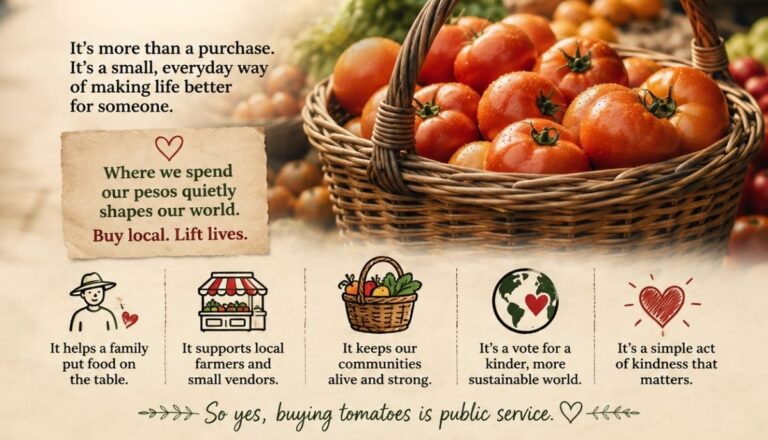
You buy the tomatoes from the roadside vendor.
You stay in the neighborhood rather than isolating yourself in a resort.
You ask before taking someone’s photograph.
You learn the name of the place you’re visiting—and perhaps a little of its history.
You leave a little money behind, yes.
But perhaps more importantly, you leave respect behind.
And sometimes, you bring something back: a story, a connection, a new appreciation, maybe even the urge to do something useful.
Something like this happened on my recent trip back home.
Returning to Iloilo City gave me a new appreciation for the city where I was born. I was proud of the enormous changes I saw—changes that somehow managed to develop around the familiarity of places I grew up with, including heritage structures and sites that could easily have disappeared beneath the rush of modernization.
There was something reassuring about it.
The city was moving forward without completely forgetting where it came from.
And perhaps the message was simple:
Respect the heritage that helped make us who we are.
Could that, too, be an act of service?
Apparently, my answer was going to be yes.
Because somewhere along the way, that appreciation turned into something more unsettling.
Something that felt almost like a need.
A Micro Rural CBD
My work with Lift PH Up Organization, Inc. takes me to Paluan, Occidental Mindoro. And somewhere there is a little enclave—a piece of beachfront that seems to be quietly crying out:
Preservation!
The place has stayed with me.
Perhaps because I had already seen, in my own home city, that development and preservation do not necessarily have to be enemies.
Perhaps because I kept wondering what could happen if this little piece of Paluan were developed without losing what makes it worth preserving in the first place.
So I proposed something to the landowner—a friend who had asked me, three years ago, to help him figure out what to do with the property. How about a micro rural CBD?
I called it a micro rural CBD: a nature-integrated garden commercial enclave built around a simple idea—that modern coastal development can create long-term value through environmental stewardship, habitat restoration and sustainable micro-economies, rather than simply putting buildings on a beautiful piece of land and calling it progress.
I had been thinking about it since returning from Iloilo.
So I recently wrote to my friend and said:
Yes. I’m in.
As a sign of my seriousness, I even proposed to buy a portion of the property.
I offered a sum as goodwill down payment, plus my professional fee to create the master plan and manage the development, in exchange for the remaining value of the piece of land I wanted as my anchor in Paluan.
And then came the terrifying part.
He agreed.
😂
So now, apparently, I have a new journey.
And somewhere in the middle of all this, I keep looking at an image I created for another journey:
The Children’s Discovery Camp is the destination.
Each core program is a step along the way.
And the work begins now. 👣💚

Perhaps that is where my answer to the question is taking me.
Maybe service doesn’t always look like volunteering.
It doesn’t always look like donating.
It doesn’t always look like building something for someone else.
Sometimes, it looks like paying attention.
Sometimes, it means seeing something—a child who needs an opportunity, a heritage building that deserves to survive, a piece of land that deserves to be treated with care—and deciding that you cannot simply walk away.
Sometimes, service begins with a very ordinary question:
What can I do here?
Not What can I get from this place?
Not even necessarily How can I save this place?
Just:
What can I contribute?
Perhaps that is what travelling has quietly taught me.
We travel because we want to see the world.
But sometimes, the world shows us something that asks to be carried home—not as a souvenir, but as a responsibility.
And maybe that is when travelling becomes an act of service.
Not because we set out to serve.
But because some places, some people, and some possibilities make us want to be useful.
And perhaps that is enough.
Perhaps the journey is the service.
And the destination?
Well…
We may not know exactly where it will take us.
But at least we’re already on our way.
Afternoon coffee in Iloilo City Central Market
Oh, aren’t these two photos perfect for this essay? ❤️ They bring the idea of “travel as service” down from the philosophical to the wonderfully ordinary: friends, markets, food, memory, and paying attention to the little things that make a place itself.
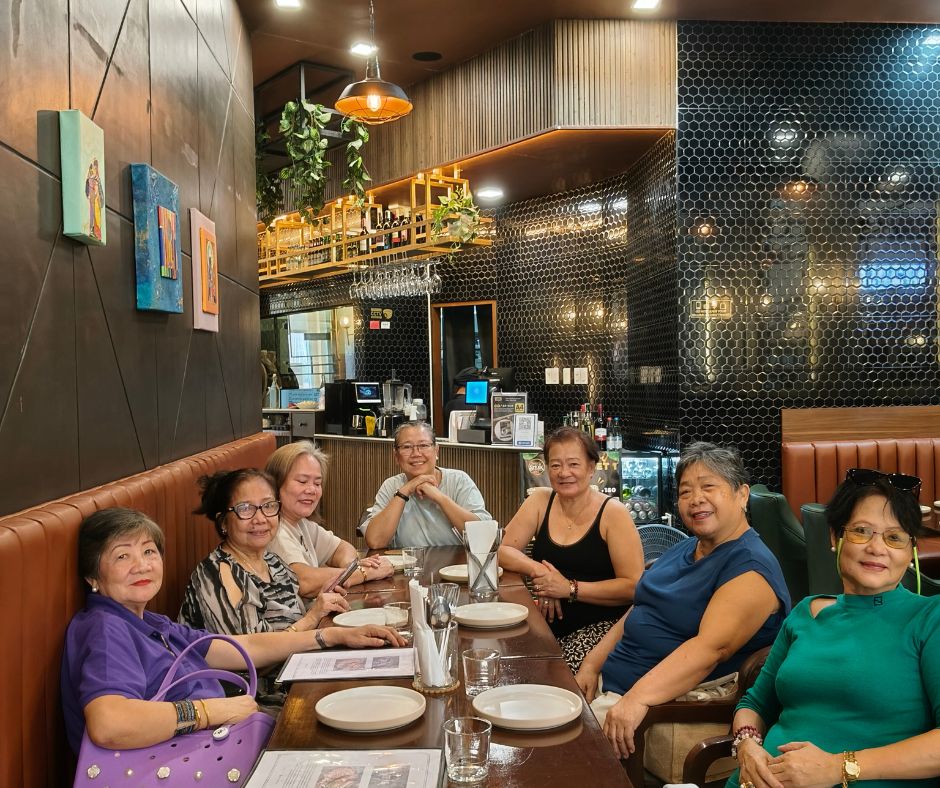
Some places are made familiar by the people who wait for you there.
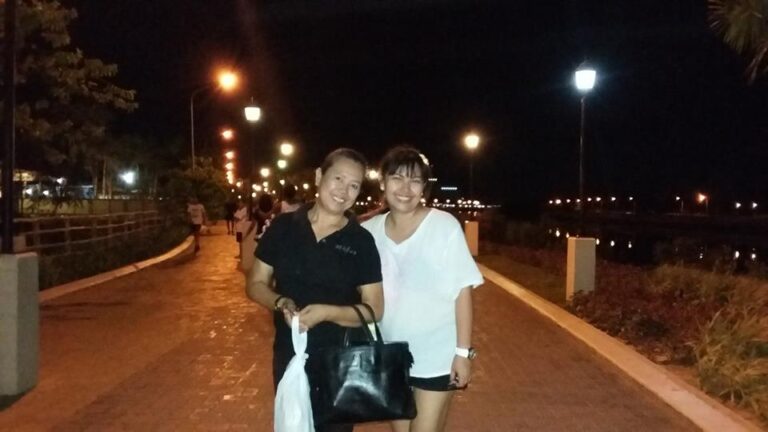
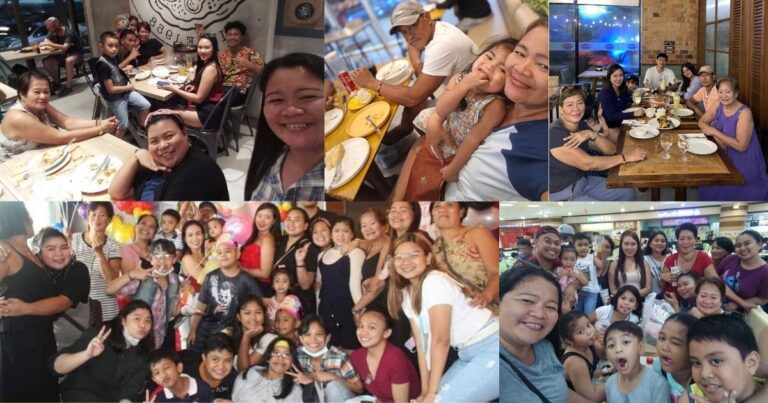
An afternoon coffee with some of my closest friends at Iloilo City’s Central Market—catching up, laughing, talking about everything and nothing.
Perhaps this, too, is part of coming home: finding that even after all the changes, there are still people and places that make the city feel unmistakably yours.
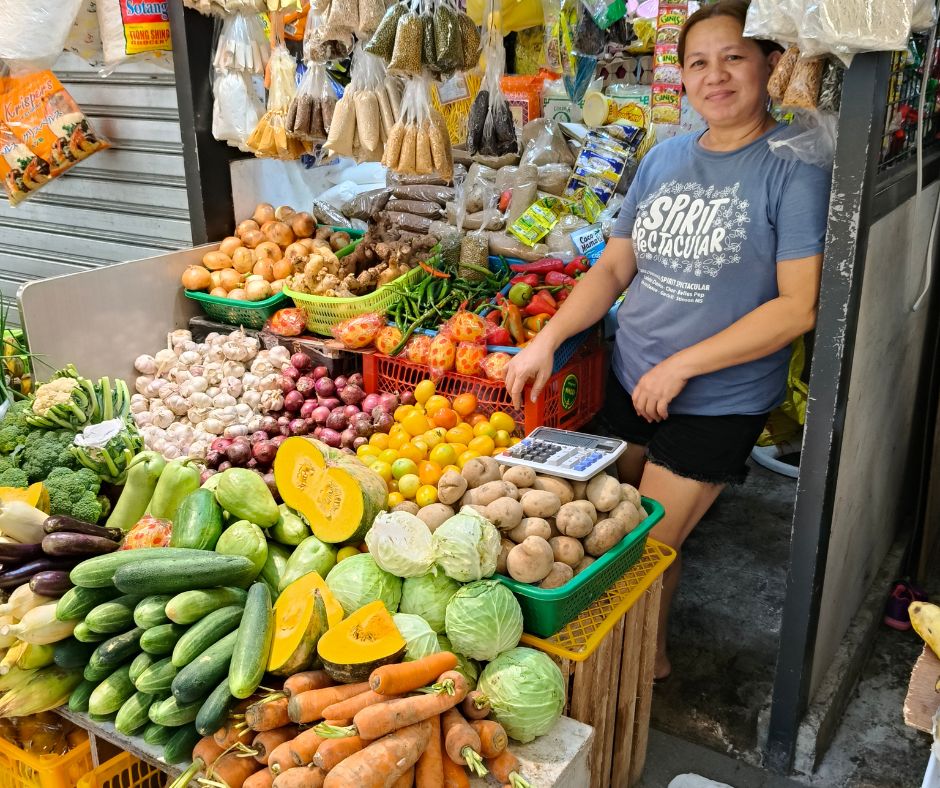
A little piece of Iloilo’s flavor.
And then there are the discoveries that remind you that authenticity can sometimes be hiding in the most ordinary places.
This is Joy Billones’, a new-found friend, little store inside Iloilo Central Market. Among all the things she had for sale was langkawas, the herb used in making sinamak, Iloilo’s famous spiced vinegar.
She was the only vendor I found who had it that day. And for me, that little discovery was worth remembering.
Because sinamak isn’t just vinegar with something spicy thrown into it. Langkawas is one of those ingredients that gives authentic Ilonggo sinamak its distinctive character.
Sometimes, you don’t have to go looking for heritage.
Sometimes, it’s hanging in a little plastic bag in a market stall. ❤️