🎨Joss Sticks and Rosaries: Finding the Soul of Binondo at the Basilica of St. Lorenzo Ruiz
By Marie. Friday, February 20, 2026
The Smoke of Two Worlds
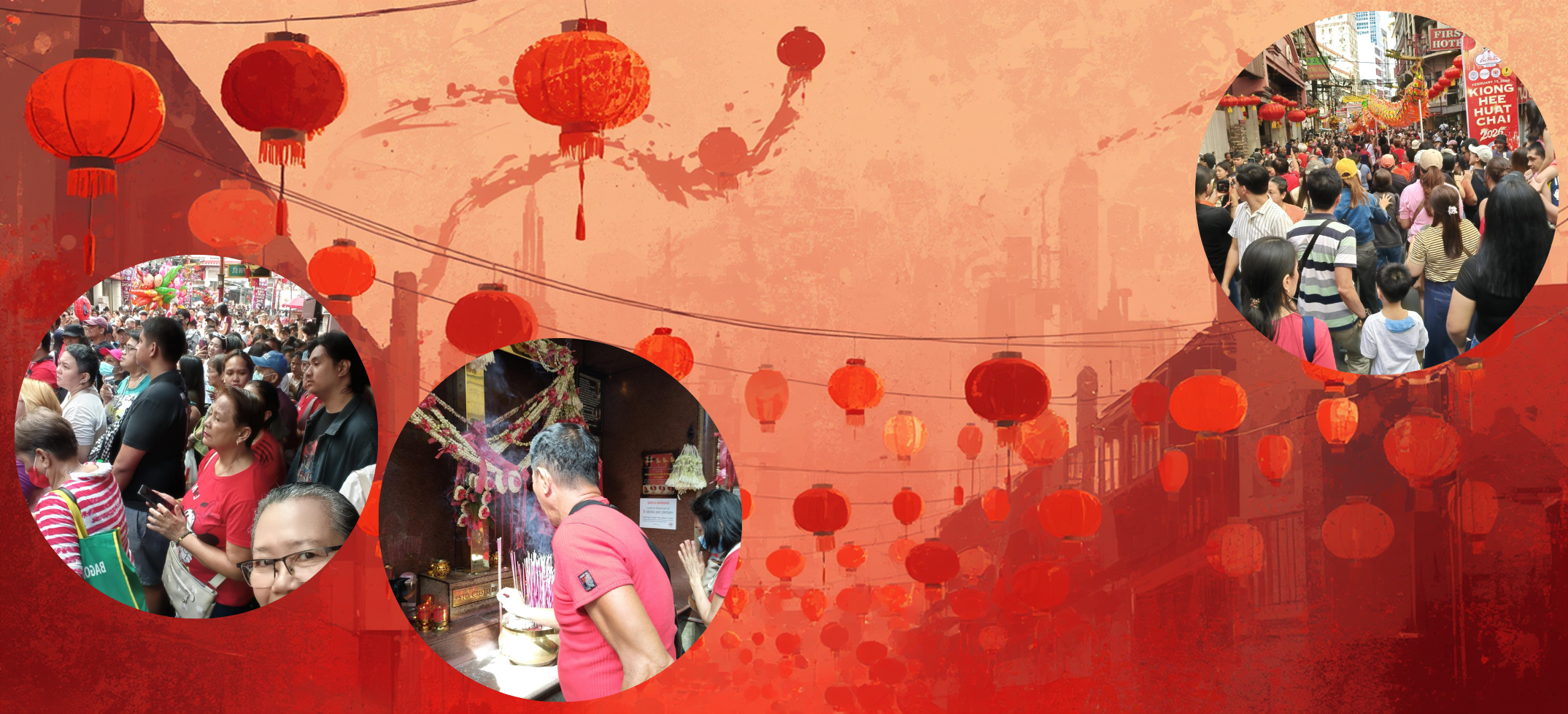
The air in Binondo last Tuesday was thick—not just with the humidity of a Manila morning, but with a "sea of humanity" that felt like a living, breathing pulse. It was February 17, and the streets were a riot of red lanterns and the rhythmic, heart-thumping beat of dragon dance drums. But as I stepped into the cool, stone embrace of the Minor Basilica of St. Lorenzo Ruiz, the frantic energy of the Chinese New Year revelry softened into something more profound. There, amidst the flickering votive candles of the Catholic tradition, I stood captivated by a sight that perfectly mirrors my own "rooted in two worlds" heritage: a quiet, steady queue of devotees patiently waiting to light joss sticks at an altar behind the Basilica. As the fragrant plumes of incense spiraled toward the Spanish colonial arches, I realized I wasn’t just looking at a religious ritual; I was witnessing the beautiful, centuries-old fusion of the Tsinoy soul—a faith that doesn't choose between ancestors and altars, but holds them both in a single, sacred breath.
In June last year, I wrote this piece in Tita M Wanders' FB page:
"ROOTED IN TWO WORLDS: A PERSONAL REFLECTION ON CHINESE FILIPINO IDENTITY
Have you noticed? Lately, some of the comments directed at our Chinese neighbors—especially on social media—have become increasingly offensive. It’s disheartening to witness.
As someone of mixed Spanish and Chinese descent, this hits close to home. My grandmother Carmen’s father hailed from the Basque region of Spain, while my father descended from a Chinese immigrant who married an Ilongga from Molo, one of Iloilo City’s seven historic districts. That lineage, so rich and layered, makes me reflect deeply—and at times, feel conflicted.
The Philippines has a long-standing and profound connection with Chinese culture, shaped by centuries of trade, migration, and cultural exchange. Chinese traders arrived in the archipelago over a thousand years ago, bringing with them goods, traditions, and values that slowly became part of the Filipino way of life. Today, many Filipinos—myself included—trace part of their identity to Chinese ancestors, particularly through the vibrant Tsinoy community.
This heritage is intricately woven into our culture. We taste it in our cuisine: in pancit, lumpia, siopao. We celebrate it during Chinese New Year, when the streets come alive with dragon dances, fireworks, and family gatherings. In business, Chinese Filipinos have long demonstrated resilience and ingenuity, shaping industries like retail, real estate, and banking.
You’ll even find traces in our art, where Chinese characters may appear in calligraphy and visual storytelling. Many Filipino surnames, too, reflect this ancestry. Through it all, Chinese heritage has helped shape a uniquely Filipino identity—one that celebrates fusion, diversity, and shared roots.
What are your thoughts? I’d love to hear them below."
The Saint of the "Mestizo de Sangley"
Standing there, I couldn’t help but think of my father’s side—the lineage that began with a migrant from Fujian who found a home and a heart in the Molo district of Iloilo. In the Spanish colonial era, we were called Mestizos de Sangley, a term for those of mixed Chinese and Filipino heritage. It is a identity built on adaptation, and no one embodies this more than the man for whom this Basilica is named: St. Lorenzo Ruiz.
Born in Binondo to a Chinese father and a Filipino mother, Lorenzo was the quintessential Tsinoy. He was a calligrapher for the church—a craft that surely drew from both the discipline of Chinese ink-work and the devotion of his Catholic upbringing. As I prayed for the success of my present journeys, I felt a strange, comforting kinship. Like him, many of us carry a "layered" soul. We are a vibrant, Filipinos with Chinese ancestry.
The beauty of the "Faith in the Fusion" isn't just in the rituals; it’s in the realization that our ancestors didn't just trade goods—they traded dreams, prayers, and a vision of a future where two worlds could become one. In a world that sometimes tries to divide us based on where we "came from," the quiet queue for joss sticks behind a Catholic altar is a silent, smoking protest. It says: We belong to both.
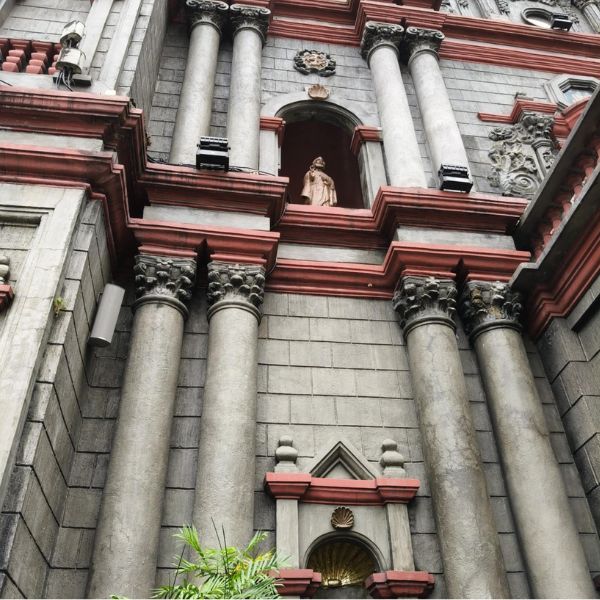
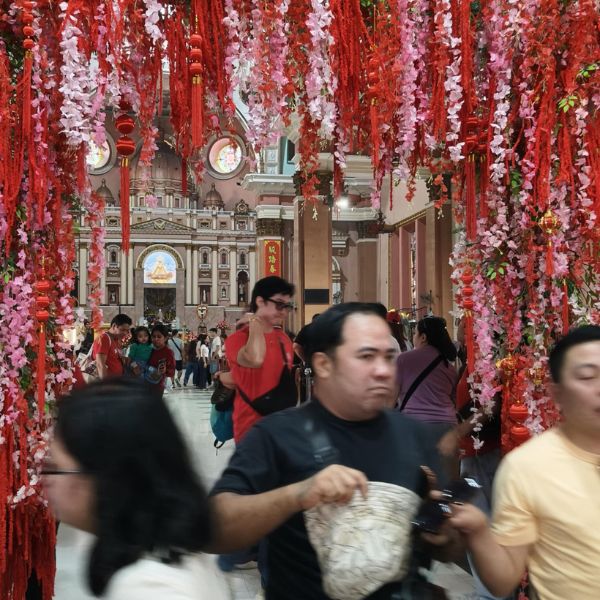
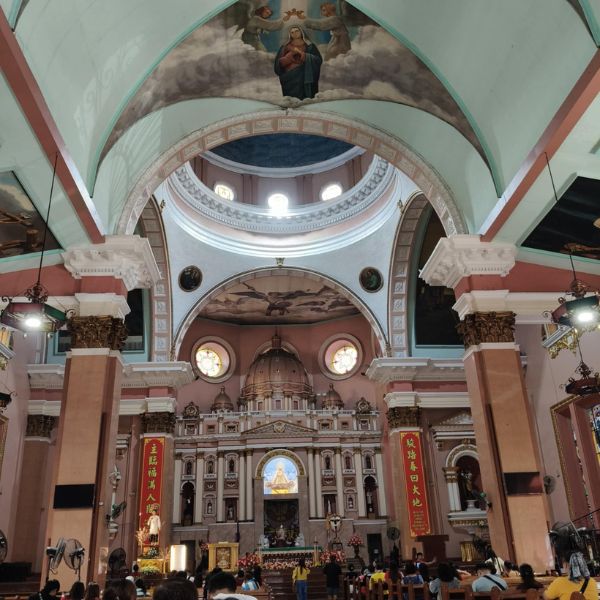
The Minor Basilica and National Shrine of Saint Lawrence Ruiz of Manila, also known as Our Lady of the Most Holy Rosary Parish and commonly known as Binondo Church, is located in the district of Binondo, Manila, Philippines. It is under the jurisdiction of the Archdiocese of Manila. The church was founded by the Order of Preachers in 1596 to serve their Chinese converts to Christianity.The original building was destroyed in 1762 by British bombardment. A new granite church was completed on the same site in 1852 however it was greatly damaged during the Second World War, with only the western façade and the octagonal belfry surviving. The namesake shrine is dedicated to the first Filipino Saint, Lawrence Ruiz of Manila. Pope John Paul II raised the shrine to the status of Minor Basilica via his decree Binondi in Frequenti on 23 July 1992. The decree was signed and notarized by Cardinal Angelo Sodano.- Wikipedia
A Witness to the Tapestry
As I walked out of the Basilica and back into the vibrant, chaotic embrace of Binondo’s streets, the smell of incense stayed with me. It felt like a reminder. In a time when digital walls are often built with unkind words and divisive comments, the "sea of humanity" I witnessed in Binondo tells a different story. It’s a story of a thousand years of shared history, of grandmothers from the Basque region and great-great-grandfathers from Fujian, all woven into this beautiful, complex tapestry we call Filipino.
I write this not just as a wanderer, but as a witness. Whether I am documenting the resilience of the communities in Bago City or the quiet faith in a Binondo alley, my mission remains the same: to find the threads that connect us. Because when we look closely at the smoke rising from those joss sticks, we see that it all drifts toward the same sky. And in that shared space, there is enough room for all our stories, all our prayers, and all our blended hearts.
The Cross at the Crossroads: Sto. Cristo de Longos
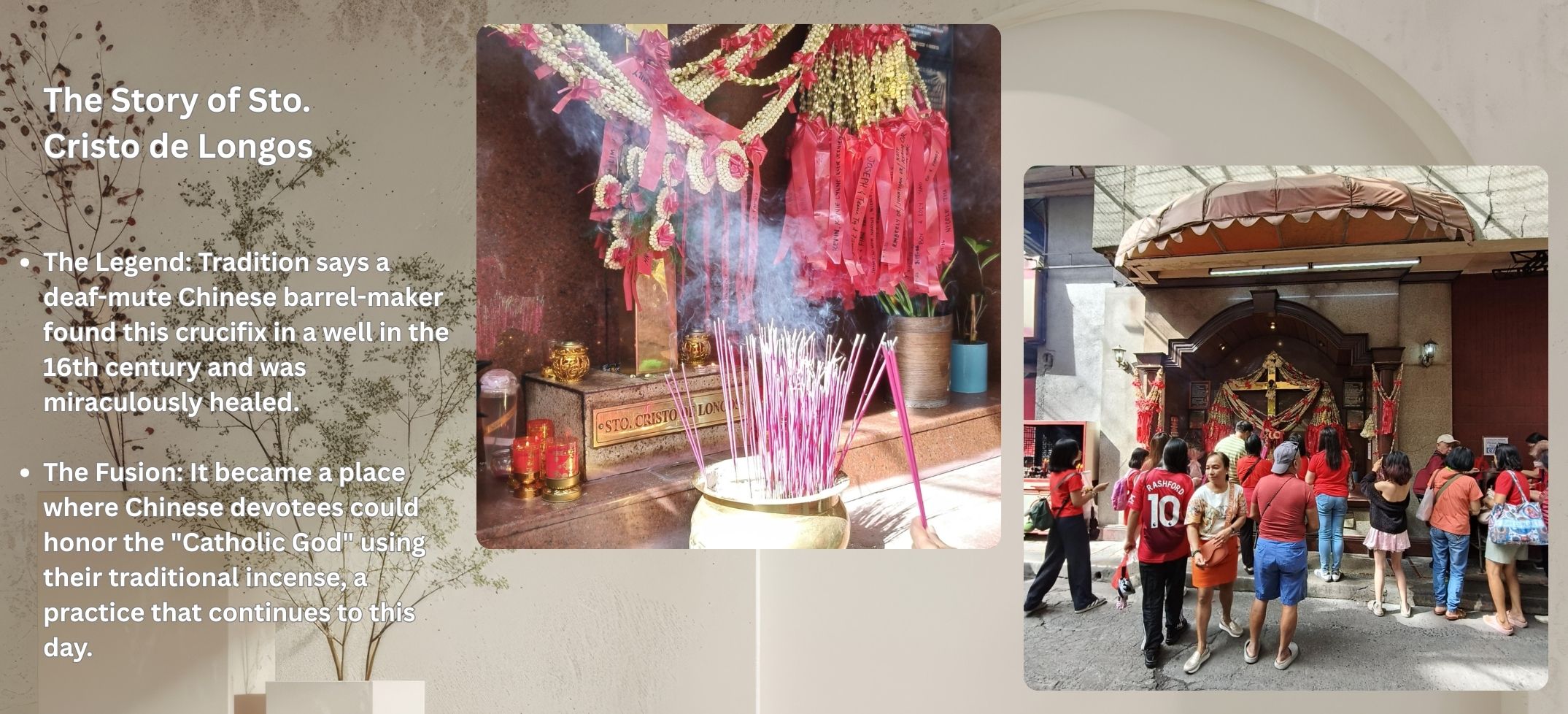
As I stood by the side of the Basilica, I found myself drawn to a small, smoke-filled alcove that serves as a literal bridge between two worlds: the shrine of Sto. Cristo de Longos. Here, the image of a crucified Christ is draped in sampaguita garlands and surrounded by the vibrant red ribbons of Chinese petitions.
Legend tells of a 16th-century Chinese barrel-maker, a deaf-mute, who discovered this crucifix in a well and was instantly healed. Today, that miracle lives on through a beautiful, silent exchange of cultures. I watched as a man leaned in close, his face illuminated by the glow of red candles, clutching pink joss sticks. He wasn't choosing between being Catholic or being Chinese; he was simply being a devotee, seeking luck, health, and more blessings in the language of his ancestors.
In Binondo, "swerte" (luck) and salvation aren't at odds. They mingle in the fragrant plumes of incense that drift past the image of Christ, reminding us that faith is rarely a straight line—it is a tapestry, woven with the threads of every soul that has ever stopped here to pray.
Also read: 🎨 The Silent Characters of Zhuhai: A Journey Between Three Chinas A Detour to Bago City Shenzhen, in a Blink From Binondo to Bangkok: Reflections Inspired by “Can’t Buy Me Love” Drama Looking for Suzy Wong — Wandering Through Fiction in Wan Chai
My e-book, THE TASTE OF PROFIT - Six High-ROI Business Models Inspired by The Taste of Memory: Culinary Journeys That Stay With You is now out and is available on Gumroad.
Pivot from low-value, generic tours to High-ROI, Niche Culinary Businesses with The Taste of Profit, the e-book, your blueprint to build a business that not only delivers an unforgettable experience but also archives heritage, empowers local artisans, and translates authentic cultural connection into sustainable revenue.
Buy on
For those who travel with intention, memory deserves a map
Introducing CARRIED PLACES—poetic companions for travelers who seek meaning in motion.
🎁 Get this mini printable travel memory kit FREE when you Subscribe to TITA M JOURNALS newsletter. And, receive updates, future kits, or custom offerings from titamwanders.com.

Whether you're diving into eco-volunteering, dancing through festivals, or solo-traveling for wellness, these kits help you turn experience into legacy.
🧳Because rest isn’t just a pause—it’s a page in your story.